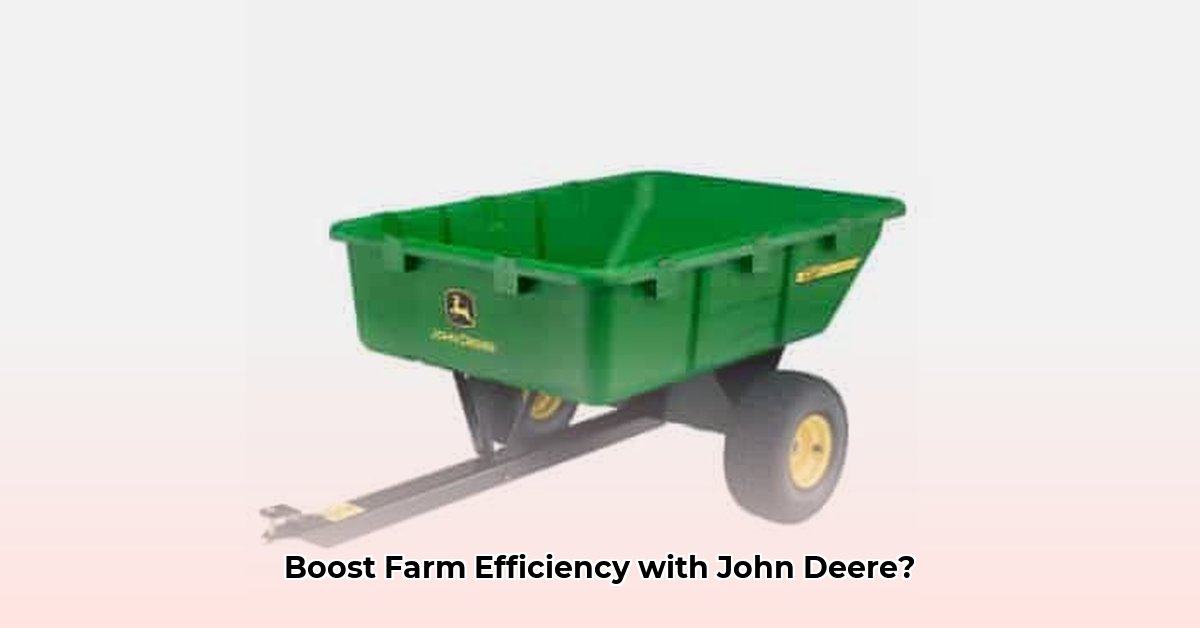
John Deere 7 cu. ft. Poly Utility Cart: A Sustainable Farming Ally?
The John Deere 7 cu. ft. Poly Utility Cart offers a compelling proposition for farmers seeking to enhance efficiency and embrace sustainable practices. Its robust design and substantial capacity promise to streamline operations, but a balanced assessment requires examining both advantages and limitations. This article explores how this cart can boost productivity, details its role in sustainable farming, and addresses crucial questions surrounding its environmental footprint. For more comparisons of John Deere equipment, check out this helpful resource.
Features and Benefits: Efficiency Redefined
The John Deere cart boasts impressive durability, thanks to its heavy-duty polyethylene bed and rustproof powder-coated steel frame. This translates to a significantly extended lifespan, reducing the need for frequent replacements and minimizing waste. Isn't longevity a key component of sustainable practices?
Its 7 cubic foot capacity allows for efficient hauling of substantial loads – from soil and compost to harvested crops and tools. This significantly reduces the number of trips required, directly translating into lower fuel consumption and reduced greenhouse gas emissions. Have you calculated the potential fuel savings on your farm?
Furthermore, the cart's versatile design, with molded channels and pockets, adapts to a variety of materials and sizes, enhancing its utility across diverse farming operations. This adaptability makes it highly suitable for shifting organic materials and optimizing the overall efficiency of farm workflows.
Sustainable Applications: Putting the Cart to Work
The John Deere cart directly supports sustainable farming through several key applications:
Efficient Organic Matter Transport: The cart's high capacity facilitates the efficient movement of compost and manure, vital for soil health and nutrient cycling. This reduces fuel consumption while improving soil quality, a cornerstone of sustainable agriculture.
Reduced Soil Compaction: Fewer trips across fields minimize soil compaction, improving water infiltration and reducing erosion. This positive impact on soil structure promotes healthier plant growth and overall ecosystem health.
Minimizing Greenhouse Gas Emissions: Reduced fuel consumption directly translates to lower greenhouse gas emissions, showing a positive commitment to environmental stewardship. What are your current fuel usage patterns, and how might this cart reduce them?
Limitations and Considerations: A Realistic Perspective
While the cart's potential for sustainability is clear, a critical evaluation requires acknowledging current limitations. Comprehensive life cycle assessment (LCA) data is currently lacking. An LCA would comprehensively assess the environmental impact across the entire product lifecycle—from manufacturing and material sourcing to disposal. This gap in data represents an opportunity for future research. Professor David Johnson, Agricultural Engineer at Purdue University, highlights the necessity of "complete life cycle assessments to gain a true understanding of a product's environmental impacts."
Furthermore, the environmental impact of tire disposal and the manufacturing processes involved must be considered to provide a complete and balanced view. These factors need thorough investigation to fully understand the sustainability benefits.
Actionable Steps for Sustainable Use
Farmers can maximize the cart's sustainability impact by focusing on these key areas:
Maximize Lifespan: Regular maintenance—cleaning, lubrication, and timely repairs—significantly extends the cart's lifespan, minimizing waste. A well-maintained cart will last for years, far exceeding the lifespan of cheaper alternatives.
Explore Alternative Fuels: Investigating the use of alternative fuels, such as biodiesel or electricity, for towing the cart can drastically reduce the carbon footprint. This proactive approach demonstrates a dedication to minimizing environmental impact.
Responsible Disposal: Plan for end-of-life disposal, exploring recycling options for plastic, metal, and tires. Understanding and preparing for the cart's final stage of its life-cycle is critical for environmentally sound farming practices.
Data-Driven Optimization: Monitor fuel consumption, labor time savings, and soil health improvements to quantify the cart's direct impact on sustainability. Data-driven fine-tuning demonstrates a commitment to evidence-based farming.
Conclusion: Towards a Sustainable Future
The John Deere 7 cu. ft. Poly Utility Cart presents a powerful tool for enhancing farm efficiency and promoting sustainable practices. While comprehensive LCA data is still needed, responsible usage, proactive maintenance, and careful attention to end-of-life management can unlock its full sustainability potential. By embracing data-driven approaches, farmers can contribute valuable insights towards a future where farming thrives in harmony with the environment.